Sustainability at exoiq
Responsibility for the Environment and the Future
Sustainability is a core component of everything we do at exoIQ. As part of the TTS-Festool Group, we take responsibility for the environment, resources, and future generations—from our vision and transparent reporting to recycling and environmentally sound disposal.

Vision
Our vision at exoIQ
As part of the TTS-Festool Group, environmental policy is not an isolated issue for us, but a central component of our holistic sustainability management. For the companies of the TTS-Festool Group, sustainability means ensuring that future generations have the same opportunities and possibilities as the current generation. In the context of global megatrends, we identify three key environmental impacts that shape our actions:

We are taking responsibility to actively combat climate change. The TTS-Festool Group’s contribution: the continuous reduction of relative CO₂ emissions throughout the value chain.

Natural resources are finite. To ensure equal opportunities for future generations, the Group is committed to conserving resources and reducing its relative material consumption.

The health of our users is our top priority. We minimize emissions and avoid the use of harmful substances—to ensure a safe and healthy work environment.
Our mission:
Legal requirements are the bare minimum for us. We go above and beyond by using the best available technology—always taking economic feasibility into account. The TTS-Festool Group ensures the consistent implementation of its environmental policy through an established and continuously optimized environmental management system.

Sustainability Report of the TTS-Festool Group
With our Sustainability Report for the 2024 fiscal year, we are providing clear transparency: We demonstrate how our actions have social, environmental, and economic impacts. At the same time, we disclose the strategies we are pursuing and the specific measures we have already implemented to advance sustainability in all areas.

Electronics Recycling
Note on environmentally sound disposal
A sustainable society is based on the responsible and efficient use of natural resources. That is why, for us, the end of a product’s useful life does not mean the end of its value: recyclable materials are recovered and reintroduced into the resource cycle—to protect the environment and conserve valuable raw materials.
Waste electrical and electronic equipment and batteries
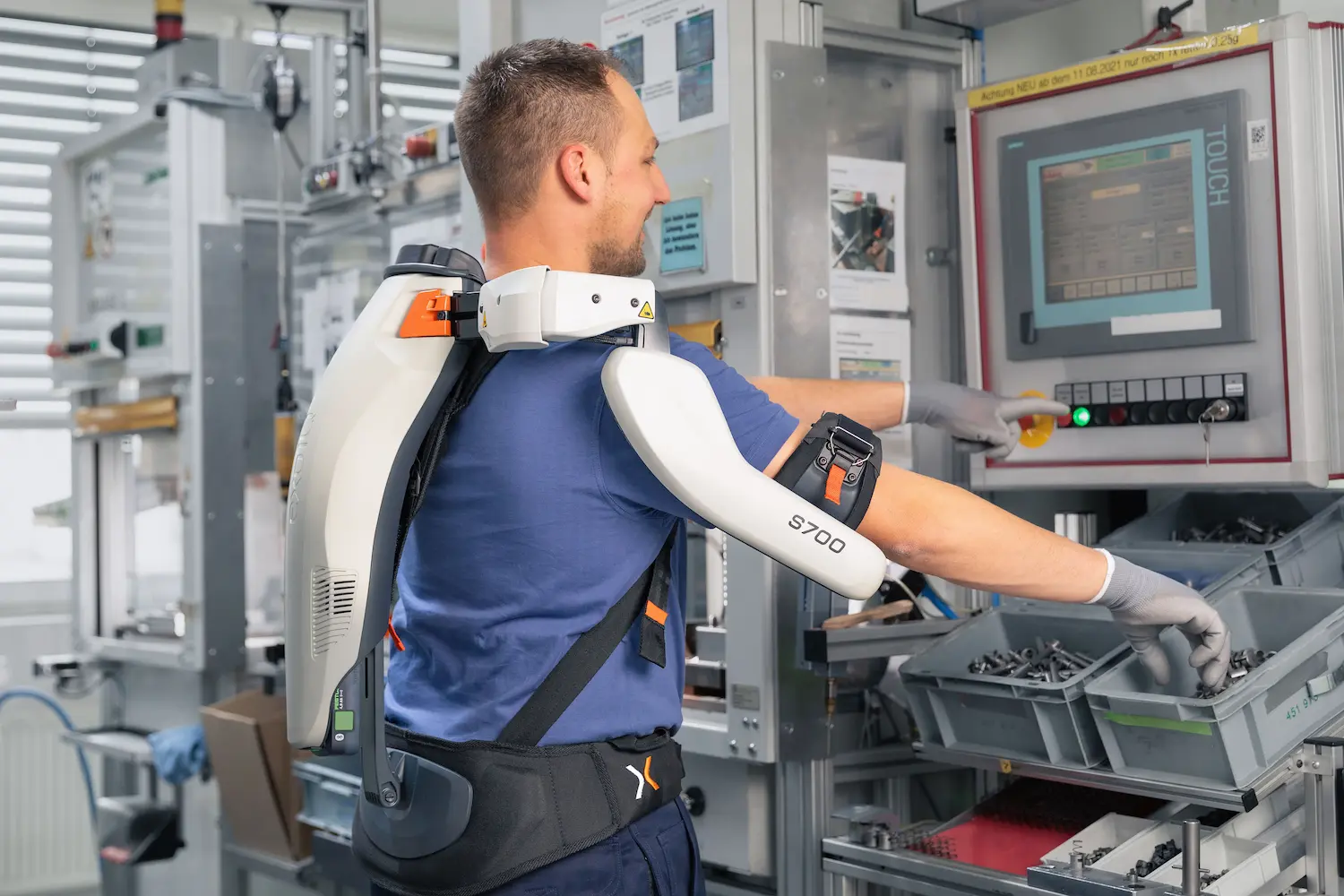
As a manufacturer of exoskeletons (exoIQ) and electrical appliances and batteries (Festool), we comply with all legal requirements worldwide regarding product placement on the market, take-back, and environmentally sound disposal.
Consumers can return their old devices free of charge to public collection points, our authorized dealers, or the Festool customer service center. In Germany, returns can also be made at designated electronics stores, online retailers, and grocery stores.
Before disposal, discharged used batteries and rechargeable batteries that are not permanently installed in the device, as well as lamps that can be removed without damage, must be separated. This ensures that these components are sent for proper recycling.
Why is that important?
Improper disposal can have a significant negative impact on the environment and human health due to the hazardous substances contained in electrical appliances.
Requirement to provide information to meet collection and recycling targets
The Federal Ministry for the Environment, Nature Conservation, Nuclear Safety, and Consumer Protection (BMUV) publishes annual figures on the quantitative collection and recycling targets for waste electrical and electronic equipment in accordance with Section 18(4), sentence 3 of the Electrical and Electronic Equipment Act (ElektroG).1
1 Source: Statistical data from the BMUV on electrical and electronic equipment
Packaging recycling
Dispose of packaging in an environmentally friendly manner
Packaging is a valuable raw material. Through separate collection and recycling, it can be returned to the resource cycle—an important contribution to protecting our environment. The materials can be identified using the alphanumeric code in accordance with European Decision 97/129/EC. Please follow your local municipality’s guidelines for separate collection.
The most common packaging materials
for TTS-Festool products

Paper and cardboard (Code 20–22)
These include cardboard boxes and blister cards. These materials are generally meant for recycling.

Plastics (Code 01–07)
Blister packs, plastic film, bags, and Styrofoam inserts are all considered plastic packaging. In many areas, they can be disposed of in the yellow bag or yellow bin.

Wood (Code 50–51)
Wooden packaging can usually be dropped off at local recycling centers.
Separate the individual materials before disposal, such as the blister card from the blister pack. This ensures that each material is sent to the correct recycling process.
If you have any questions, please contact: umwelt@festool.com
Country-specific information
Country-specific characteristics ofpackaging sorting
Special Features in France
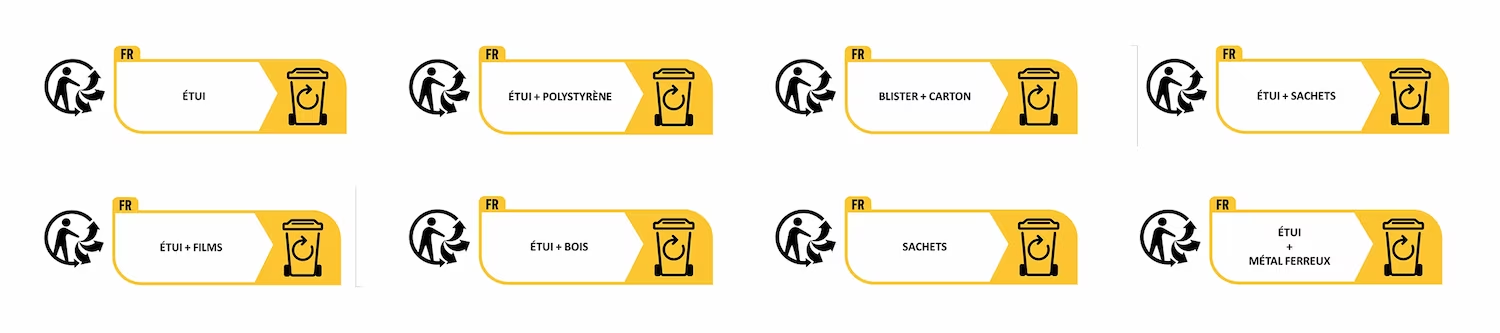
In France, different packaging materials can be distinguished by the sorting instructions indicated by the Triman logo. Please follow the recycling guidelines in effect in your municipality. A brief overview of the main packaging materials used by Festool:
Unique Features in Spain
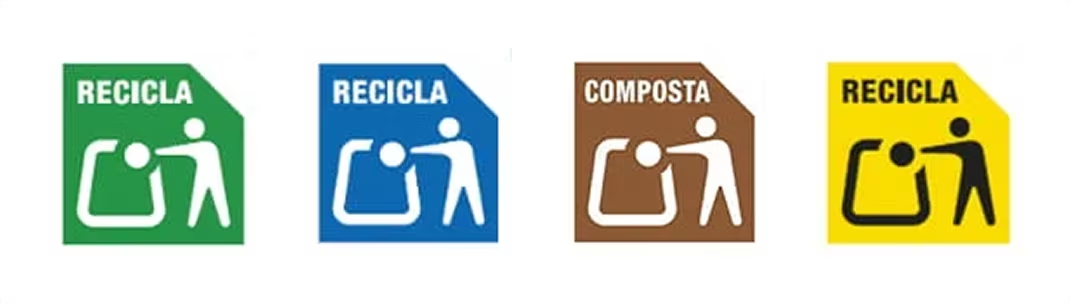
In Spain, different types of packaging materials can be identified by the sorting instructions on the RECICLA symbol. Please follow the separate collection guidelines in effect in your municipality.
Further resources
More about exoIQ

News
Find out more about the latest updates from exoIQ.
Press
Here you can get press material about us...

FAQ
Visit our FAQ page, where we collect all the information you need.

Contact
Do you have any questions about our exoskeletons? Please contact us!