Knowledge
Exoskeletons for Overhead Work
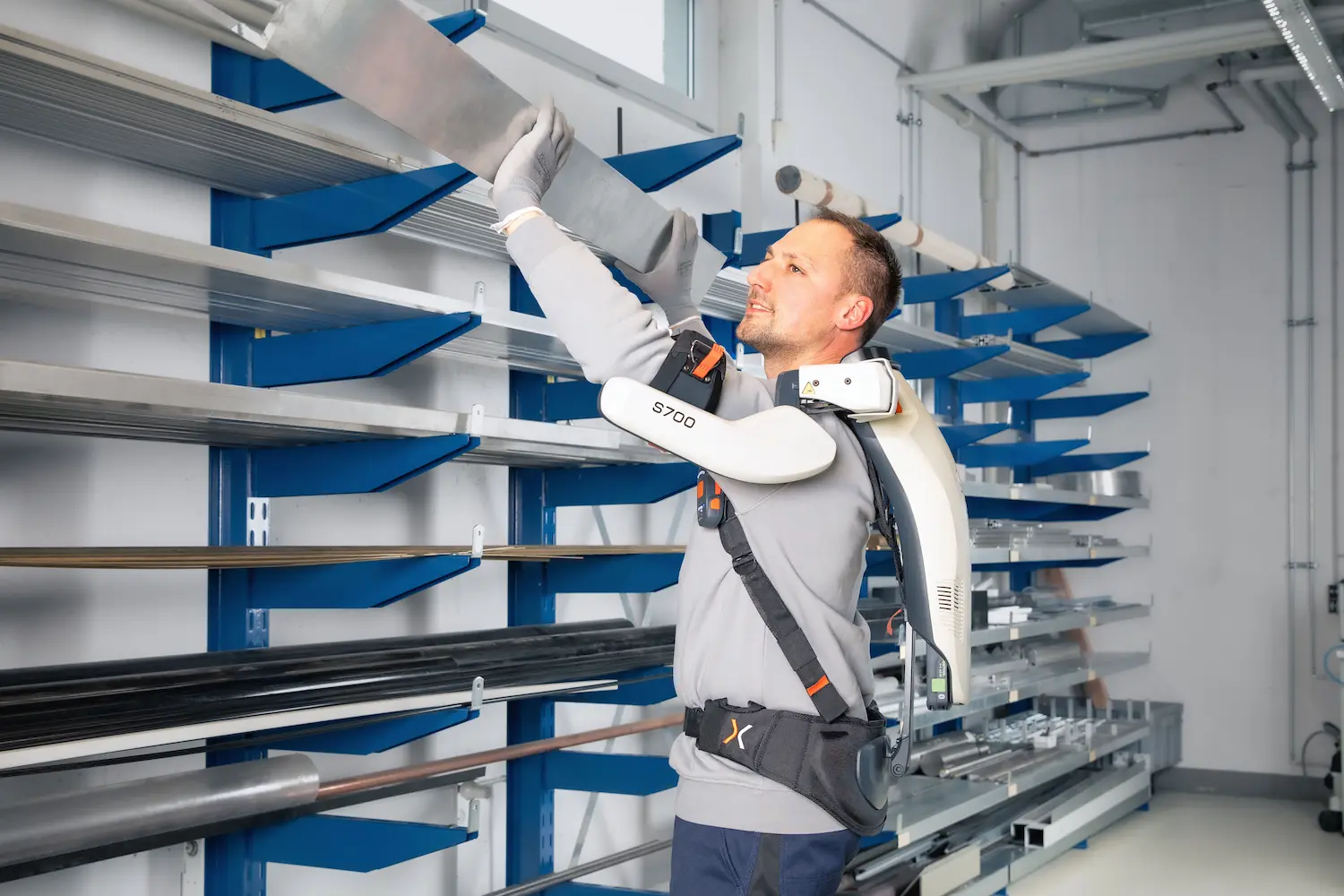
Working overhead is part of the daily routine in many industries. Whether during assembly in the automotive industry, maintenance work on machinery, or installations in the construction industry, workers must hold their arms and hands above shoulder height for extended periods of time, often while handling tools or components.
These activities place particularly heavy strain on the shoulder and neck muscles. The more frequently and for longer periods the arms remain raised, the greater the physical strain. Many companies are therefore looking for ways to make overhead work more ergonomic and to reduce the strain on employees during their daily work. One measure that is increasingly being used for this purpose is shoulder exoskeletons.
The Most Important Points at a Glance
- Working overhead puts a particularly heavy strain on the shoulder and neck muscles.
- Fatigued muscles are less able to stabilize the shoulder.
- In the long term, this increases the risk of shoulder problems.
- Shoulder exoskeletons reduce physical strain when working above shoulder height.
- As a result, the muscles tire more slowly and remain effective for longer.
Definition
What is overhead work?
Overhead work refers to situations in which the hands or arms are moved or held at or above shoulder height for an extended period of time. This requires the shoulder and neck muscles to work intensively to hold the arms in position and perform movements.
Examples of typical overhead work
- Assembly work in the automotive industry, such as on vehicle bodies or in interior trim
- Work in mechanical and plant engineering, such as assembling components above shoulder height
- Maintenance and Repair Work on Production Facilities
- Electrical installations on ceilings, cable trays, or technical systems
- Assembly and Installation Work in the Skilled Trades
- Order-picking and maintenance tasks in logistics centers
- Painting, sanding, or machining tasks with raised arms
From an ergonomic standpoint, working overhead is therefore one of the most physically demanding activities.
Causes
Why is working overhead particularly strenuous?
The muscles in the shoulder and neck area are relatively small and significantly weaker than, for example, the muscles of the lower extremities (legs) or the trunk. At the same time, the shoulder is the joint with the greatest range of motion in the body. The arms must be guided with precision and in complex ways through the coordinated action of many small muscle groups in the shoulder.
If the arms must be held raised for extended periods, even their own weight places a strain on the shoulder muscles. This is why even tasks performed without tools—or with relatively light ones—can be physically very strenuous. Heavy, hand-held tools or lifting loads significantly intensify this effect. In addition, when working overhead , the neck muscles must keep the head hyperextended, which places an additional heavy strain on them. As a result, tension in the shoulder and neck area is a constant companion for anyone who frequently works overhead and/or does so for extended periods of time.
Consequences
Why is it important to reduce shoulder muscle fatigue
?
The shoulder is the most mobile joint in the body. Unlike the hip, it is not guided by large joint surfaces, but primarily by what is known as the rotator cuff. It consists of several muscles and tendons that hold the head of the humerus in the shoulder socket and provide the necessary stability for the joint.
When the muscles become fatigued, the shoulder can no longer be adequately stabilized. This increases the risk of wear and tear and improper loading, which in the long term can lead to discomfort or conditions such as impingement syndrome, in which tendons or bursae are often painfully constricted.
The more the shoulder muscles are relieved of strain and protected from fatigue,the lower the risk of chronic shoulder problems.
Examples of typical stressors
- holding the arms up for an extended period of time
- static holding work over extended periods of time
- repeated movement patterns
- Working with tools or components above shoulder height
- Restricted freedom of movement in confined work areas
For employees, this often means faster physical and muscular fatigue. Repetitive tasks performed over several hours per shift, with few breaks, are particularly demanding.
Not all overhead work puts the same amount of strain on the shoulder
The extent to which overhead work strains the body depends on several factors:
- Duration of Employment
- Frequency of movements
- Weight of tools or components
- Posture While Working
- Workplace Design
It makes a difference whether the arms are raised only briefly or must be held at shoulder height or higher for an extended period. Confined workspaces, awkward postures, or additional loads can also increase the strain.
Relief
How can exoskeletons help with overhead work?
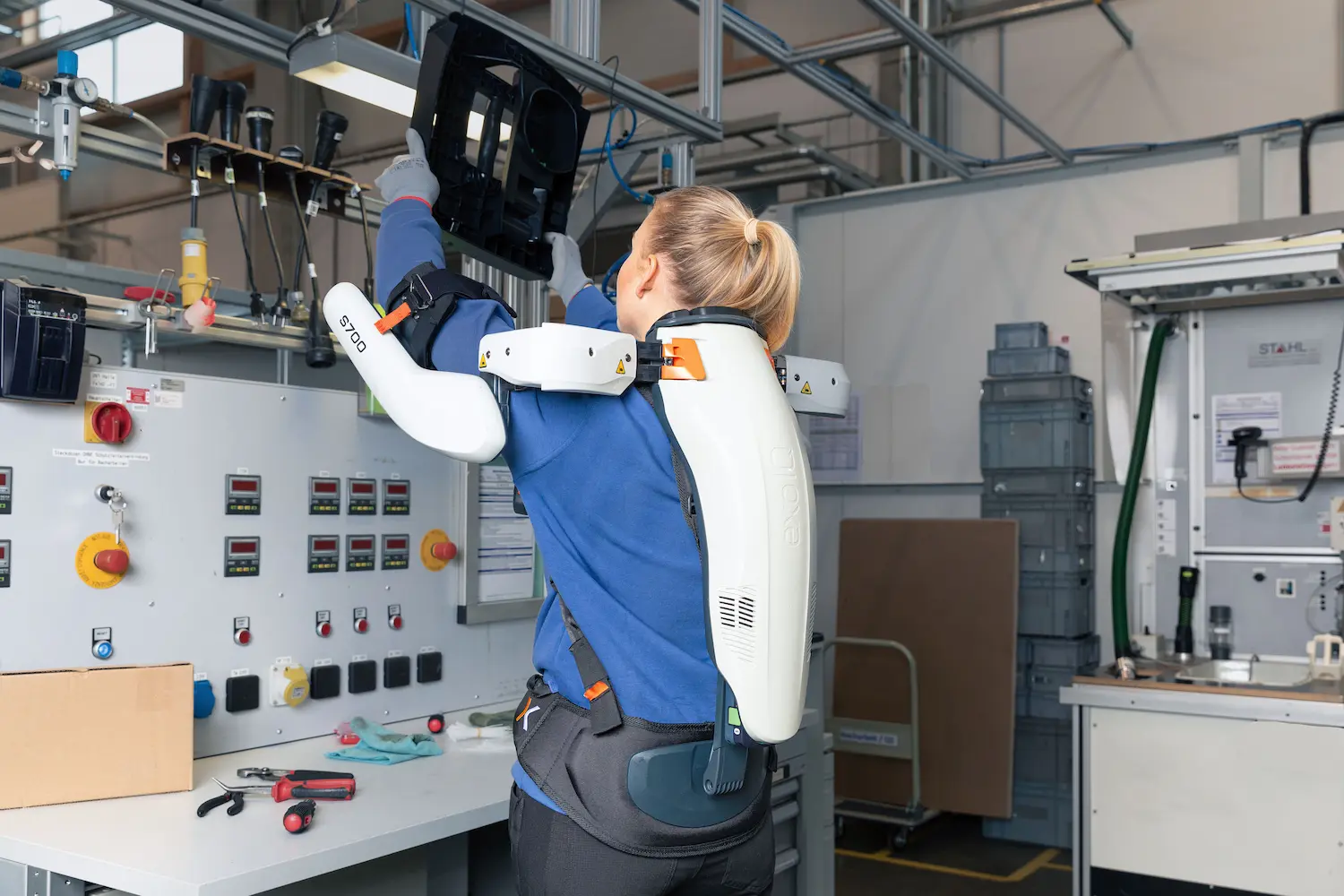
Shoulder exoskeletons are increasingly being used to improve workplace ergonomics during overhead work. They assist workers in tasks that require raised arms and relieve strain on the shoulders and neck.
The S700 active shoulder exoskeleton is used primarily for assembly, maintenance, and installation work. Thanks to its active support, it takes over a significant portion of the required muscle strength.
This noticeably relieves the strain on the affected muscle groups. The muscles tire more slowly and can perform their actual function—guiding and stabilizing the shoulder joint—for longer and more effectively.
Benefit
Benefits of shoulder exoskeletons
in everyday work
Support for Overhead Work
Relief for the Shoulders and Neck
Less fatigue

Greater comfort during longer periods of use
Contact
Get help with overhead work.
Would you like to find out if the S700 shoulder exoskeleton is suitable for overhead work at your facility? Please contact our experts.