A Hands-On Look at the Future of Exoskeletons: The B900 in Action at the SAPbased Smart Factory
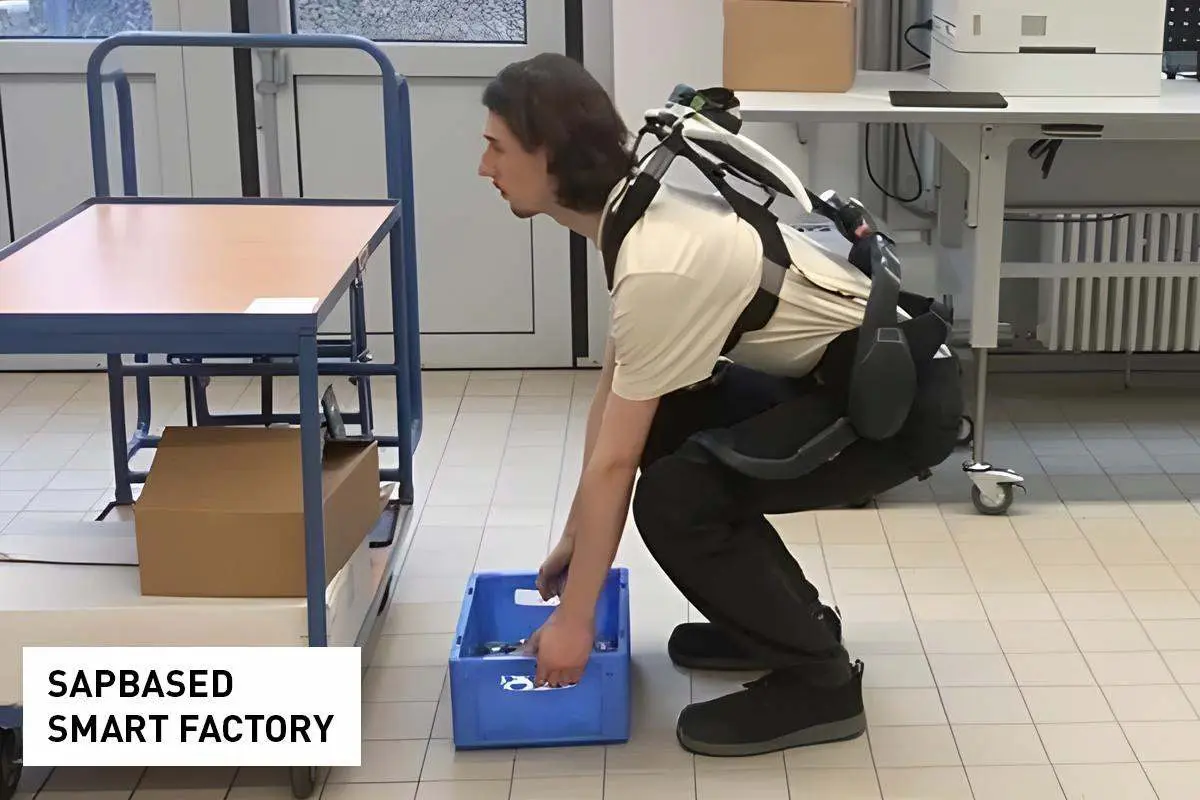
The handover of one of the first prototypes of the B900 active back exoskeleton to the SAPbased Smart Factory marks a significant milestone: There, state-of-the-art exoskeleton technology is not only explained but also put to practical use, tested, and made tangible. For exoIQ, this project is a powerful example of how technological innovation, research, and industrial practice can work together effectively.
An Early Look at the Next Generation of Exoskeletons
The SAPbased Smart Factory is an interdisciplinary research, teaching, and technology transfer platform at OTH Amberg-Weiden that takes a holistic approach to industrial digitalization. It combines modern automation, robotics, AI, and IoT with SAP-supported business processes and serves as a regional showcase for future technologies.
Even before the official launch of series production and shortly after its trade show debut in November 2025, the SAPbased Smart Factory was handed a prototype of the B900. This gave the university early access to a technology that specifically addresses areas where industrial work remains physically demanding, even in highly automated environments.
The exoskeleton was presented by Marco Heidelberger, Sales Manager for Southeast Germany at exoIQ, to Prof. Dr.-Ing. Günter Kummetsteiner (Laboratory Director), Christoph Hammer (Laboratory Engineer), and Paul Schmidt (master’s student in medical technology participating in the accompanying practical project)—on behalf of the SAP-based Smart Factory at the Weiden site.
Ideal for logistics and production—exactly where it counts
The SAPbased Smart Factory focuses on logistics and production processes. It is precisely in these areas that the B900 addresses real-world, practical use cases: during equipment setup, when lifting, lowering, or moving components, and during repetitive manual tasks performed over extended periods of time.
The added value of the B900 active back exoskeleton quickly becomes clear to project participants: The exoskeleton is not a replacement for industrial robots, which automate repetitive tasks. Rather, its value lies in situations where human flexibility is required and employees need physical relief over the course of hours—without restricting their freedom of movement.
Experience Technology—Realistic and Practical
At the SAPbased Smart Factory, the exoskeleton is set to be actively integrated into teaching and demonstration formats in the future. The plan is to create hands-on courses where students and visitors can experience the technology’s capabilities for themselves. As an active learning and demonstration tool, the B900 will thus become part of a forward-looking ecosystem that brings industry, research, and education closer together.
The project with OTH Amberg-Weiden serves as a prime example of how modern exoskeletons can be used in the future—not as a technological vision, but as a tool that already exists to assist people in industry. For us at exoIQ, this type of collaboration holds special significance: We ourselves have our roots in university research and continue to work closely with universities and scientific institutions to further develop exoskeleton technology—in a way that is both scientifically sound and practical—since 2014. The collaboration with the SAPbased Smart Factory represents another step for us on the path toward healthier, more sustainable work.
Table of contents
Additional Resources
More about exoIQ

News
Find out more about the latest updates from exoIQ.
Press
Here you can get press material about us...

FAQ
Visit our FAQ page, where we collect all the information you need.

Contact
Do you have any questions about our exoskeletons? Please contact us!