Age structure on the job market
Demographic change is clearly noticeable almost everywhere. The age structure on the labour market is also changing permanently as a result. On average, our population is getting older and older. This leads to numerous challenges, especially in the manufacturing sector. Here, physically demanding, manual tasks are performed particularly often. The older the workforce gets, the more urgently solutions are sought as to how these workers can also continue to effectively perform their jobs in the company. In this context, there are numerous possibilities to ensure long-term ability to act into retirement age through targeted measures.
Content:
- Population development in Germany in general
- Effects on the labour market
- Ways to address the age structure in the labour market
- Possible solutions using the example of the exoskeleton
Population development in Germany in general
The population is getting older on average and will also decline in the future according to several model calculations by the Federal Statistical Office. The average age of working people in Germany has risen significantly in recent decades and is now just under 44 years, with the trend continuing to rise.
Effects on the labour market
The fact that the population is getting older on average has a logical effect on the structure of the workforce. This creates additional personnel pressure, especially for physically demanding jobs, because these are increasingly perceived as unattractive. For example, the number of training contracts concluded in transport and logistics has been falling for years. The lack of young people is part of the problem.
As a reciprocal effect, however, this is exacerbated by the fact that, according to the Federal Statistical Office, the number of people in employment between the ages of 40 and 50 has been falling steadily for many years. One reason for this is, for example, specialist incapacity to work, when certain physical activities can only be performed poorly or not at all at this age.
The result is a precarious shortage of labour, which is clearly evident both among young people and among older cohorts. Although the rate of employed people over 50 is rising, this hardly applies to sectors with physically demanding work, as these also become increasingly unattractive as employees get older.
Ways to address the age structure in the labour market
In this context, two approaches emerge that can complement each other:
- Attract more young people by making the activities more attractive, and
- Retain middle-aged and older workers.
Optimisation of the working environment is the best way to achieve this. Physical activities can be made easier and workplace ergonomics improved. The use of ergonomic aids can permanently reduce or even completely avoid high muscular and joint-specific or one-sided stresses. Such measures are not only of added value for physically ageing employees, but also increase the attractiveness for junior staff.
Possible solutions using the example of the exoskeleton
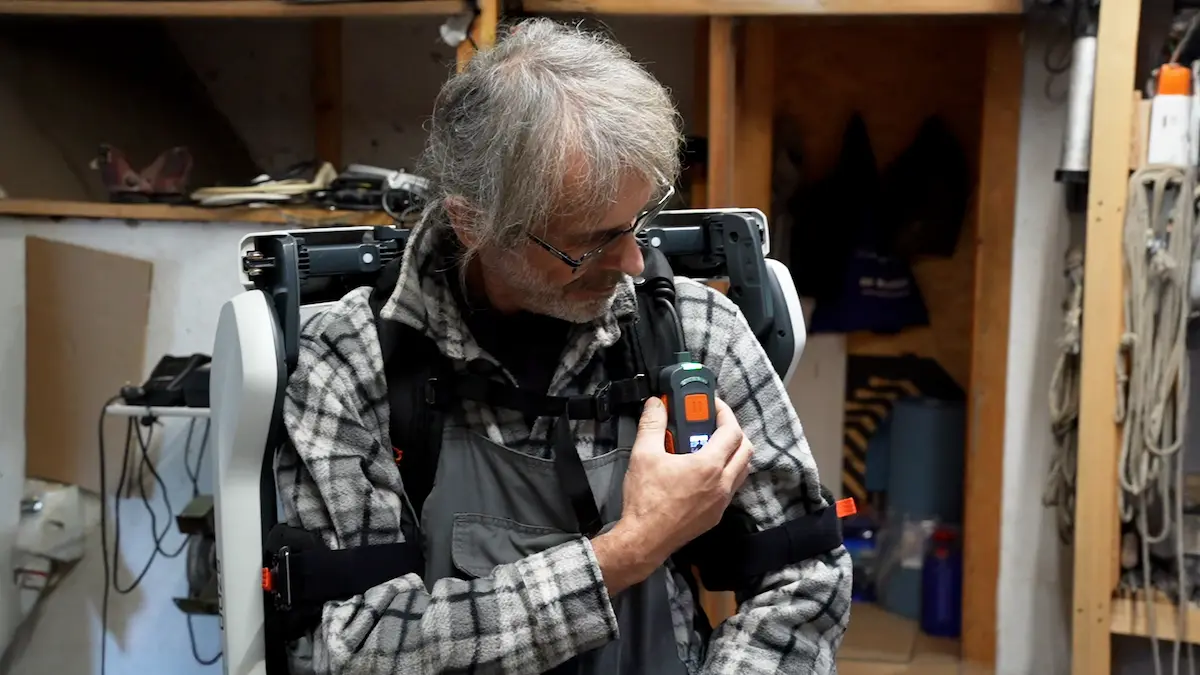
Heavy physical work can be specifically optimised through the use of ergonomic aids such as a high-performance exoskeleton. This makes employees' activities easier, gives them more strength for stressful physical work and thus helps to minimise fatigue and physical fatigue symptoms. An exoskeleton actively supports movement sequences and effectively reduces overloads. This in turn ensures satisfied and efficient employees, more concentration and can positively influence quality costs on the company side.
Summary
The age structure on the labour market is forcing companies to promote their attractiveness for potential young employees on the one hand and to retain existing staff for longer on the other. This is playing an increasingly important role, especially in physically demanding jobs in industry or logistics. Ergonomic support can reduce overloads in a targeted manner. Exoskeletons are particularly suitable for this. They promote the attractiveness of the activities. With their use, it is possible to create reliable added value on several levels at once. The changing age structure in society and in the labour market can thus be strategically counteracted.
Table of contents
Additional Resources
More about exoIQ

News
Find out more about the latest updates from exoIQ.
Press
Here you can get press material about us...

FAQ
Visit our FAQ page, where we collect all the information you need.

Contact
Do you have any questions about our exoskeletons? Please contact us!